Monday, May 25, 2015

THOUGHTS on Thea Harrison's "Midnight's Kiss"

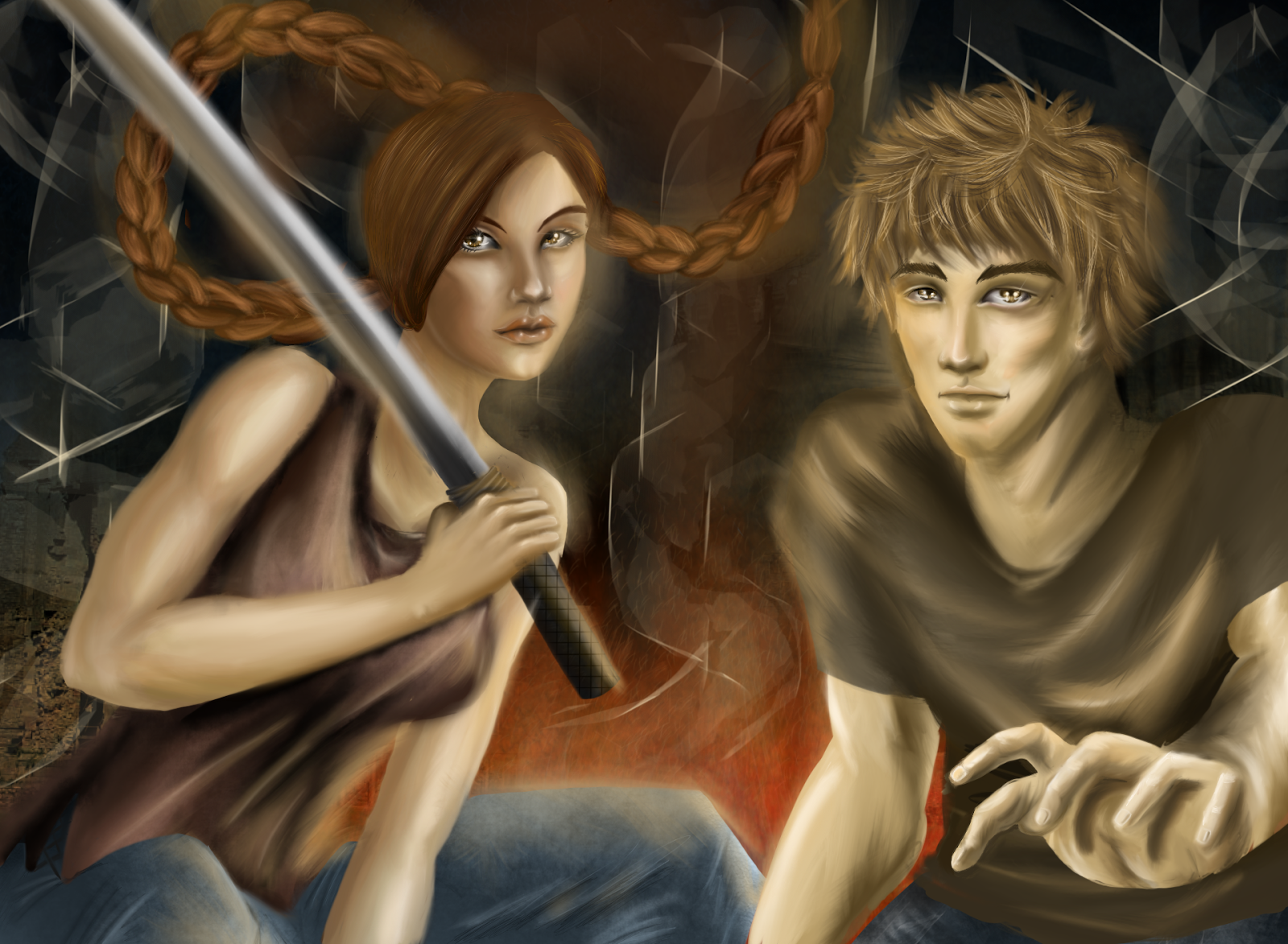
Thea Harrison's "Elder Races" series is one of my favourites - the heroines and heroes are diverse personalities, and the world-building is interesting. Unfortunately, I didn't enjoy the latest book, "Midnight's Kiss" nearly as much as some of the other books in the series. The heroine of "Midnight's Kiss" is Melisande (Melly), actress and heir to the Southern Californian Light Fae Demesne. The hero is Julian, the King of the Nightkind/Vampyres. Many years ago Melly and Julian were in a relationship, but the relationship ended badly, with both parties nursing unresolved emotional issues. The culmination of the previous book, "Night's Honor," however, yields consequences that throw Julian and Melisande back together; Justine, the villain (of this and the previous book), kidnaps Melisande in an attempt to manipulate Julian and take control of the Nightkind Demesne. "Midnight's Kiss" is about Julian and Melisande reacting to and surviving Justine's machinations, while dealing with their emotional issues.

In this post, I evaluate whether "Midnight's Kiss" passes three well-known tests for female presence in media: the Bechdel Test, the Mako Mori Test, and the Sexy Lamp Test. In doing so, I attempt to determine whether my lack of enthusiasm can be attributed to the book's failure to pass some of these tests.

1.0 Melly and the Sexy Lamp Test

Melly passes the Sexy Lamp Test - when she and Julian are being held captive, it is her innovation and lock-picking that allows her to kill the vampire guarding her and Julian. These actions allow her and Julian to escape. Melly also procures that motorcycle that allows her and Julian to make it back to a safe place. Melly thus makes plans, implements them, and the results of her actions directly affect the plot of "Midnight's Kiss." A sexy lamp could have achieved none of these things. Unfortunately, this is the only one of the tests that "Midnight's Kiss" passes - it fails both the Mako Mori Test and the Bechdel Test.[1]

The Sexy Lamp Test: 


  Melly

2.0 Melly, Justine, and the Mako Mori Test

Although Melly has a life independent of the heroes, having her own career and role in the political landscape of the Elder Races universe, as far as I can tell, she does not have a narrative arc that is independent from Julian's (the main) narrative arc. All of the examples of Melly's agency mentioned above are actions that trigger plot movement in Julian's narrative arc - i.e., the quelling of the uprising by the murderous and rebellious vampyre Justine. The other narrative arc that can be attributed to Melly is her goal to resolve the mystery of what actually happened to cause her and Julian to break up many years ago. Again, this narrative arc is not independent of Julian's - Melly thus does not pass the Mako Mori test, given the criteria below:

Mako Mori Criteria
(i) has a female character ( Melly)(ii) who has her own narrative arc  and (iii) that narrative arc is not about supporting a man's narrative arc 

The failure of the Mako Mori test, I think, is a major reason why I found "Midnight's Kiss" somewhat unsatisfying. While I liked Melly, I didn't find her to be a particularly interesting heroine. This can be at least partially attributed to the fact that, in failing the Mako Mori test, Melly isn't as complex a character as I prefer.

As a note, I think that if any of the narrative of "Midnight's Kiss" had been following Justine, she plausibly could have passed the Mako Mori test - after all, she sets the entire plot in motion by aiming to assassinate Xavier in the previous book, and by kidnapping Melly in this book. Her actions thus provoke, as opposed to support, Julian's narrative arc. However, we don't get any narrative that follows Justine, or her point of view, so it is difficult to attribute a "narrative arc" to her.

Mako Mori:
Melly:
Justine:  

3.0 "Midnight's Kiss" and the Bechdel Test

"Midnight's Kiss" just barely passes the Bechdel test. While Melly has conversations with other female characters - such as her mother, and twin sister - the content of these conversations, is for the most part, about men. The longest conversation that Melly has with another woman is the one with her mother, Tatiana. They discuss how Melly's mother figured out how to contact her, but this leads almost directly into a discussion about Keenan O'Sullivan, the biker who Melly bought a motorcycle from. Although Keenan O'Sullivan is not a main character, he is, technically, a man. Then Melly tells her mother about how Justine kidnapped her as a way to gain leverage over Julian. This part of conversation is thus also, in a way, about a man. Finally, however, the discussion turns to what sort of resources Tatiana can send to help Melly - i.e., cash, weaponed troops. This part of the conversation is not about a man, so "Midnight's Kiss" does pass the Bechdel Test, as it

(i) has at least two women in it, (ii) shows those women having a conversation, where (iii) the aforementioned conversation is about something other than a man.   

4.0 Other Issues

As I mentioned, I did not enjoy "Midnight's Kiss" as much as others in the series (like "Kinked,"  "Lord's Fall," Serpent's Kiss" and "Dragon Bound"). This was at least partially due to the fact that Melly failed the Mako Mori test, and consequently, I didn't find Melly to be a very interesting heroine. [2] The results of evaluating whether "Midnight's Kiss" pass the selected three tests for feminism are summarized below.

Mako Mori:
Melly:   

Sexy Lamp:
Melly: 

Bechdel:    

FOOTNOTES

[1] Although "Midnight's Kiss" only passes 1/3 of the selected tests for feminism, there are many, many, many books outside of the genre that fail all three of the tests.

[2] There were other little things that bothered me about the book. Such as the "You don't need a helmet, I won't let us crash" bit at the end. I understand that the main emotional issues that Julian and Melly have is trust, but I would have preferred that the resolution of their trust issues be exemplified in a way that seems...a little less irresponsible. Also, I didn't find the plot device used to break up Melly and Julian in the first place to be very original at all. But I did still enjoy reading the book! Thea Harrison is definitely an author that I trust and I auto-buy the books in the "Elder Races" series.

Monday, May 18, 2015

THOUGHTS on Meljean Brook's "Demon Bound"

Meljean Brook's "Guardian" series is one of my favourite UF (Urban Fantasy)/PNR (Paranormal Romance) series. The book that irrevocably hooked me on the series was book 4, "Demon Bound." In this post, I evaluate whether "Demon Bound" passes three well-known tests for female presence in media: the Bechdel Test, the Mako Mori Test, and the Sexy Lamp Test.

1.0 THE SET UP: Guardians, Demons, Free Choice and Bargains

Meljean Brook's Guardian series has very intricate and complicated world-building (I love it), that I will only briefly touch on.  The overarching theme throughout the series is the importance of human free choice. The main players in the series are Guardians, humans who have sacrificed their own lives in order to save people whose lives were in danger from preternatural threats like a demon, vampire or nosferatu. These humans who have sacrificed their lives are visited by the Doyen, Michael, who offers the humans a choice. They can choose to stand by their original choice and die, or they can choose to be transformed into a Guardian. If they choose to be a Guardian, they will gain supernatural powers of shape-shifting, super strength,  the ability to fly. They will also develop a unique gift whose nature is usually a reflection of some aspect of their human life.  Guardians are bound to protect humans from supernatural threats, but there is an important catch: they can never subvert a human's free will.

The heroine of "Demon Bound" is Alice Grey, a guardian whose gift has manifested as communication with and the control of monstrously large spiders. Known as the "Black Widow," even for a guardian, Alice is considered creepy and strange; her movements are sharp and jittery like a spider's, and her academic interests are obscure. Raised in Egypt in the late 1800s, Alice has already been a guardian for 120 years by the time that "Demon Bound" takes place. The hero of "Demon Bound," in contrast, is Jake Hawkins, a novice guardian who died protecting small children from a nosferatu that was terrorizing a village in Vietnam. Jake was introduced in the previous book, "Demon Night," where we learned that his gift is teleportation.

2.0 ALICE GREY and the MAKO  MORI Test

"Demon Bound" passes the Mako Mori test - the main narrative arc of "Demon Bound" is Alice Grey's story. Before Alice was transformed into a guardian, she made a bargain with a demon. She promised to bring the demon's Michael's heart, not knowing at the time who Michael was. After being transformed by Michael into a Guardian, and learning who Michael is, Alice is horrified by what she promised. Because the makers of unfulfilled promises are punished by 1000 years of torture in a frozen field in hell, Alice is conflicted between her loyalty to the Guardians and Michael, and the promise she made as a human. The resolution of this conflict is the main narrative arc of "Demon Bound"; it is the narrative arc that connects "Demon Bound" to overarching storyline of the Guardian series. [1] Alice thus has her own narrative arc that is not about supporting a man's narrative arc - she makes "Demon Bound" pass the Mako Mori test, as it

(i) has a female character ( Alice Grey)(ii) who has her own narrative arc 
(  fulfilling her bargain without betraying the Guardians), and (iii) that narrative arc is not about supporting a man's narrative arc 

Mako Mori Test: 3/3 


3.0 DEMON BOUND and the BECHDEL TEST

"Demon Bound" also passes the Bechdel Test. Alice and Irena, another Guardian, have a four-page conversation about Baba Yaga. This segues into a discussion about Alice's bargain and the promise that Alice extracted from Irena years ago: in the event that the demon, Teqon, comes calling for the fulfillment of Irena's promise, Alice forced Irena to promise that she would lock Alice in a prison, so that Alice would not be able to fulfil her promise. Alice and Irena, two women, thus have a rather long conversation about something other than a man - so "Demon Bound"
(i) has at least two women in it, (ii) shows those women having a conversation, where (iii) the aforementioned conversation is about something other than a man. 

Bechdel Test: 3/3 

4.0 ALICE GREY, JAKE HAWKINS and the SEXY LAMP TEST

Alice Grey also passes the Sexy Lamp test. Much of the plot development in "Demon Bound" is low-action - Alice and Jake do a lot of research, given Alice's role as the Guardian's librarian, and Jake being assigned to be her assistant. The research, however, leads Alice and Jake to discover the skeleton of Zakril, one of the first Guardians. Research on Zakril's skeleton leads to Alice and Jake discovering the existence of the Grigori, one of the most important points in the overarching storyline. But it is Alice's actions/research that first leads to the discovery of the temple where Zakril is found, she thus could not be replaced by a Sexy Lamp (or in the case of Alice, a creepy lamp).

Additionally, when Alice and Jake are in Hell, held captive by demons, Alice is the one who figures out how to secretly communicate. And she is the one who rigs their prison with razor-sharp spider threads, a crucial ingredient in their plan for escape. The plan itself is Jake's, which shows that both Alice and Jake pass the Sexy Lamp test - neither of them could be replaced with a Sexy Lamp, because both take actions that are crucial to the events that occur - in this case, their escape from captivity. The issue of whether or not Jake passes the Sexy Lamp test is important for "Demon Bound" because Jake is much younger and in a lower position of authority than Alice within the Guardian ranks - i.e., he is in a role that is usually allocated to the heroines in romance novels. But in any case, both Alice and Jake pass the Sexy Lamp test.

The Sexy Lamp Test:   2/2
  Alice Grey
  Jake Hawkins
5.0 Jake Hawkins and the Mako Mori Test

Given that Jake fulfils a role that is usually allocated to heroines in romance novels, it's equally important to consider whether he would pass (a modified version of) the Mako Mori test. Does he have is own narrative arc that is not about supporting Alice's narrative arc?

Jake as a hero is a rather well-adjusted and uncomplicated guy, even if he has a problem filtering out insensitive things he shouldn't say - he's definitely not your typical broody alpha male with father issues. He does have his own narrative arc, however, even if it's small. Jake has always felt guilty about dying when he did, and leaving his then-pregnant girlfriend alone. He felt extra guilty because when he left to join the army, knowing he might die, he knew that he wanted different things than his girlfriend did, and feels that in dying, he didn't live up to his responsibility. Jake's pregnant girlfriend is a married great-grandmother by the time of "Demon Bound," as Guardians are bound to 100 years of training in Caelum before they are allowed to return to earth. Jake's narrative arc is thus about dealing with his guilt regarding what might have been his life. Although Jake's first contact with his human family is a teleportation accident, afterwards he chooses to face his daughter and see what he missed. He thus has his own narrative arc, separate from Alice's narrative arc, in which he shows agency in its resolution. All in all, Jake passes the Mako Mori test (modified to account for the fact that he's not female, he's just in the role normally allocated to female characters). So all in all, "Demon Bound" passes all three of my selected tests for feminism.

Mako Mori:
Alice:    
Jake:  N/A, , 
Sexy Lamp:
Alice: 
Jake: 

Bechdel: 
Alice:    
Jake:  N/A

6.0 Conclusion

"Demon Bound" is one of my favourites in Meljean Brook's Guardian series - the interactions between Jake and Alice are definitely funny, and there are definitely gritty parts (Alice is in a hard position), and grand parts (the way that Jake and Alice plan to deal with the demons and the bargain). The sad parts are downplayed, but there are sad parts (Alice's married life, for instance, and her students all deciding to ascend instead of staying to fight). It's thus not surprising as to why I feel justified in loving this book - not only does it fulfill all of my selected criteria for female presence, it also fulfils all my criteria for what I love in a book. It also does it while being original - very few romance novels have heroes like Jake, and even fewer books have heroines like Alice.

FOOTNOTES

 [1] I guess one could argue that the overarching storyline of the entire series is Michael's narrative arc, so every other narrative arc supports his. But Michael does not feel at all like a main character in any of the books except the final one, so I reject this analysis!

Monday, May 11, 2015

THOUGHTS on Nalini Singh's "Rock Hard"

"Rock Hard" is the second book in Nalini Singh's Rock Kiss series. I was not a fan of the first one,  "Rock Addiction," but Nalini Singh is an author I trust, so I thought I'd take a chance on "Rock Hard." I liked it better than the first book, but it wasn't a favourite. In this sort of case, where a book didn't elicit any extreme emotions for me, I previously wouldn't have bothered with one of these "THOUGHTS on" posts. But now that I've set up a new trio of criteria to consider,  I thought I'd examine whether "Rock Hard" passes my selected three tests for female presence in media. There may be what some people would consider spoilers in what follows, although I don't think there's really much of an external storyline to be spoiled, and given that this is basically a genre romance, you pretty much can guess what's going to happen in terms of the romantic arc.


1.0 THE SET-UP

Unlike Nalini Singh's Psy-Changeling and Guild Hunter series, there's not much in the way of world-building in her Rock Kiss series. These are contemporary romance novels, although the characters (at least, the heroes, so far) are "larger than life" in the sense that they are rock stars, or former pro athletes. The hero in "Rock Hard" is Gabriel Bishop, a former pro rugby player turned wealthy businessman, who has been hired as a temporary CEO for the failing business where Charlotte Baird, the heroine, works. Despite Charlotte's fear of him, Gabriel sees that she's one of the few competent employees and ends up promoting her to being his personal assistant. So how does Gabriel and Charlotte's story hold up to the three basic tests for feminism I've selected?

2.0 Charlotte Baird, Gabriel Bishop and the Mako Mori Test

Both Charlotte and Gabriel have their own independent narrative arcs (in addition to their romance). Charlotte needs to overcome her fear and trauma from a particularly horrific event from her past, and Gabriel needs to deal with his childhood-induced fear of being poor and helpless, as well as needing to learn to let go of the anger he has for his father. Given this, both Charlotte and pass the Mako Mori test in that they each have their own narrative arcs that are not about supporting the other's narrative arc.

The Mako Mori Test: 3/3
(i) has a female character ( Charlotte Baird)
(ii) who has her own narrative arc ( overcoming her fear and trauma), and 
(iii) that narrative arc is not about supporting a man's narrative arc 

3.0 Charlotte Baird, Gabriel Bishop and the Sexy Lamp Test

Gauging whether Charlotte passes the Sexy Lamp Test is bit more difficult to determine, given that the driving force of these sorts of romances, IMO, is not an external plot, but rather the resolution of an internal conflict. The question is whether the resolution of Charlotte's fear and trauma is something that results as a consequence of particular actions that Charlotte takes, or whether Charlotte could have been replaced by a (damaged) Sexy Lamp that gets glued back together by the hero.  I think that Charlotte does pass the Sexy Lamp Test. At one point, Charlotte pushes Gabriel into touching the back of her neck - something that previously (and consistently) would set her off into having a flashback/panic attack. Although Gabriel doesn't want to do anything that would cause her this sort of trauma, she insists that he does, and so takes an action that leads to the resolution of her internal conflict.  Thus, Charlotte passes the Sexy Lamp Test

 What about Gabriel? I think it's important for heroes to pass the Sexy Lamp test, in order to make sure that romance novels don't just mirror-image the sexism present in the majority of mass media. In terms of the resolution of Charlotte's internal conflict, Gabriel's actions do play a crucial role - although Charlotte pushes him to take these actions, he still decides to take the sorts of actions that, while they may induce short-term fear to Charlotte, eventually lead to the long-term (at least partial) resolution of her trauma.

What's less clear, however, is whether Gabriel plays an active role in terms of the resolution of his own internal conflict - i.e., his fear of being poor (as evidenced by his workaholic nature), and his unforgiving anger at his father. In this case, it is almost entirely Charlotte who diagnoses and leads Gabriel through his emotional issues. There aren't really any times where I can clearly see Gabriel taking actions that affect his own emotional arc.

The Sexy Lamp Test:   1/2
  Charlotte Baird
 Gabriel Bishop

4.0 Charlotte Baird, Molly Webster and the Bechdel Test

As for the Bechdel Test, while Charlotte has a good friend, Molly (the heroine of "Rock Addiction,") who supports her, the majority of their conversations are about men. In most cases, Charlotte and Molly are discussing Gabriel. At one point, Charlotte and Molly discuss Charlotte's traumatic past, but as the trauma in question was inflicted by a man, the conversation is still technically about a man. There are thus not really any clear-cut cases where it appears that "Rock Hard" passes the Bechdel Test.

The Bechdel Test: 2/3
(i) has at least two women in it ( Charlotte and Molly)
(ii) shows those women having a conversation (), where  
(iii) the aforementioned conversation is about something other than a man ( )

5.0 Conclusion

Overall I enjoyed reading "Rock Hard," although I didn't feel like it was anything special, and probably won't bother to re-read it. This isn't surprising since my favourite thing about Nalini Singh's writing is usually her intricate world-building and overarching plots, none of which are really present in "Rock Hard." I didn't find "Rock Hard" to be particularly original or funny, to have parts that made me feel really sad, feel any thrill of grandness, or parts that crushed me with their grittiness.

But even though "Rock Hard" is basically a contemporary romance, a variant on the boss-secretary plot bunny, "Rock Hard" passes most of my selected tests for feminism. I would claim that Charlotte as a heroine allows "Rock Hard" to pass the Mako Mori test and the Sexy Lamp test, although "Rock Hard" fails the Bechdel test:

Mako Mori:
Charlotte:    
Gabriel:  N/A, , 
Sexy Lamp:
Charlotte: 
Gabriel:  

Bechdel: 
Charlotte:  
Gabriel: N/A 


Friday, May 8, 2015

"One for Me" Tribute to Anne Bishop's "Written in Red"

I painted this one a while ago, but wasn't sure if it was appropriate to post. But cropped, I think it's fine. This is Jenni Crowgard from Anne Bishops "Written in Red," based off this scene in the end where Jenni and two other crows show how dangerous they actually are. I decided to make Jenni Crowgard have asian-like features, because the only description is that she has black hair.


THOUGHTS on Nalini Singh's "Hostage to Pleasure"

Nalini Singh's "Psy-Changeling" series is very popular among readers of UF (Urban Fantasy) and PNR (Paranormal Romance). Although I like the series a lot, and still follow it, my favourites in the series are the earlier ones. In particular, my favourite is book 5, "Hostage to Pleasure." Now, the title of this book, IMO, is extremely embarrassing to admit to - it sounds like an 80s bodice ripper. I really wish it had a different title - I at least have a Gollancz copy with a guy's face on it, which is less embarrassing than the Berkley cover. But despite the torrid-sounding title, HtP passes all three of my selected tests for feminism with flying colours.

1.0 THE SET UP: THE PSY-CHANGELING UNIVERSE AND OVERALL STORY ARC

The "Psy-Changeling" series is set in an alternate universe, where three species of humans share the earth: normal humans, Changelings, and Psy. Normal humans are humans as we are. Changelings are humans that have animal forms, and the Psy are humans with (X-men-like) mental powers such as telepathy, telekinesis, foresight, etc, who are all linked into this mental network known as the Psy-Net. Over a hundred years ago, the Psy population was suffering from outbreaks of terrible violence from a rash of mental/emotional instability combined with their dangerous mental powers. In order to save themselves, Silence was implemented. Silence was a program to train Psy to feel no emotions; the idea is that without rage and anger, the outbreaks of violence would stop. Because their procedures failed at just targeting rage and anger, however, the Psy determined that the erasure of all emotions, including love, was worth stopping the outbreaks of violence. Fast-forward to 100 years, the time at which HtP takes place, and the Psy have apparently succeeded in conditioning away their emotions. Silence is strictly held in place by the governing body of the Psy (the Psy Council), who ensure that the Psy remain Silent by any means, while still maintaining the public face of being violence-free. In the earlier books of the Psy-Changeling series, we were shown that the perfect implementation of Silence isn't exactly as the Psy Council portrays it. There are rebels within Psy-Net who want to overthrow the council, and the heroines from book 1 and 2 are Psy who have escaped from the Psy-Net, and ended up being protected by Dark River, a pack of Changeling leopards.

As a note, there will unavoidably be spoilers for HtP in the sections that follow, and they will be unmarked because reference to these plot points form the basic content of this post.

2.0 ASHAYA ALEINE and the SEXY LAMP TEST

One of the reasons why I love HtP, despite its title, is the fact that HtP's heroine, Ashaya Aleine, passes the Sexy Lamp Test with flying colours.

If you can replace your main female character with a sexy lamp, and the story/plotline still basically works, then the story fails the "Sexy Lamp" test. 

My Interpretation of Ashaya Aleine
Ashaya was actually introduced in the previous book in the series "Mine to Possess," where she already shows major agency in terms taking actions and having consequences on the plot. In MtP, Ashaya Alleine is introduced as a psy scientist in an underground lab. Although we don't understand her motivations in MtP, Ashaya's actions are crucial in terms of the resolution of the plot:  She foils the plans of the villains by faking the death of two children who were being held in her lab, and risks her life to contact Talin McKade (the heroine of MtP) so that these children, Jon and Noor, can be taken to safety

In exchange for taking these actions to the benefit of the hero and heroine of MtP, Ashaya extracts a favour from Dark River, to be fulfilled at a later specified date. It is the fulfilment of this favour that precipitates beginning of the fifth book, HtP.

In the opening scenes of HtP, Dorian Christensen, our hero, is rescuing Keenan Aleine, Ashaya's four-year old son, from the Psy-Concil in order to fulfill Ashaya's promised favour. Thus Ashaya's actions from the previous book have triggered a major plot point in her own book, and her agency doesn't stop there. She then fakes her own death in order to escape the constant surveillance of the Psy Council, with the help of contacts among the Psy Rebels. She then - in my favourite scene in the whole series - gives a news broadcast in which she reveals highly sensitive information about the Psy Council. This news broadcast is meant to protect her son - Ashaya's goal is to make herself so high-profile that killing her son (as a means of coercing her) has too many political ramifications for the Psy Council to justify. But it is a world-changing news broadcast - in revealing the information (part truth and part lie), Ashaya Aleine singlehandedly dismantles "Protocol One," the plot by the Psy Council to increase their iron-clad control over the Psy population. The consequences of her broadcast drive not only the plot of HtP, but cause an increase in Rebel Psy sympathies among the Psy Population, which has major consquences for several of the following books in the Psy-Changeling series. There is no way that a Sexy Lamp could have so much effect on the plotline of the story.

Ashaya's news broadcast is also, in my opinion, super-ballsy. Criticizing the Psy-Council in the world of the Psy-Changeling books is not a proposition for the faint of heart - this is an action that could result in Ashaya being secretly captured and "mentally reconditioned" - i.e., essentially being turned into a vegetable. It is also interesting to note that Ashaya Aleine is an M-Psy - her Psy abilities are completely non-combatant, and she has no training in fighting or in the use of weapons. She shows major agency without being one of the ubiquitous butt-kicking hard-talking "strong women" that are so prevalent in UF/PNR (and media aiming to be somewhat more feminist, in general).

Sexy Lamp Test: 

3.0 ASHAYA ALEINE and the MAKO MORI TEST

From the previous discussion of how Ashaya passes the Sexy Lamp Test, you can see that HtP also passes the Mako Mori test. HtP

(i) has a female character (Ashaya)
(ii) who has her own narrative arc (saving her son and herself from the Psy Council), and 
(iii) that narrative arc is not about supporting a man's narrative arc

Mako Mori Test: 

4.0 HtP and the BECHDEL TEST

HtP also passes the Bechdel test, as it

(i) has at least two women in it, 
(ii) shows those women having a conversation, where 
(iii) the aforementioned conversation is about something other than a man.

For instance, early on in the book, Ashaya has a conversation with Mercy, a Dark River Sentinel (and the heroine of the following book, "Branded by Fire"). They talk about Ashaya's injured leg as Mercy performs first aid, and discuss anaesthetics and treatment. The heroine from book 1, Sascha Duncan, has a conversation with Ashaya's sister Amara. They discuss Amara's sociopathy and Sascha's Psy abilities. Ashaya also has a conversation with Tamsin, Dark River's healer. It's not completely clear whether or not this conversation counts as a pass for the Bechdel test: Ashaya and Tamsin talk about Keenan, Ashaya's four-year old son, and whether Keenan's Psy abilities could be harmful to himself and others. They end up agreeing to disagree about whether or not Keenan would be safe to have around Tamsin's own twin boys, Julian and Roman. Although this conversation is technically about male characters, one could argue that Keenan, Julian and Roman are children, and therefore do not count as "men." 

Bechdel Test: 

So all in all, HtP passes all three of the selected tests for feminism. 


5.0 Addendum: DORIAN CHRISTENSEN and the SEXY LAMP and MAKO MORI TESTS

Because HtP is a romance, I think it's important to see if the hero also passes the Sexy Lamp and Mako Mori tests; it would be problematic romance novels merely mirror-imaged the stereotype, and treated male characters the way the mass media treats female characters. 

As mentioned previously, HtP opens with Dorian Christensen rescuing Keenan Aleine from the "protective custody" of the Psy Council. His actions are thus crucial in setting up the main plot arc of the book; if he hadn't rescued Keenan, Ashaya would not have put her own escape into motion. His actions are also crucial in removing the threats to Ashaya and Keenan's lives that are triggered by parts of Ashaya's broadcast, and in getting Ashaya to throw off the veneer of her Silence. This shows that Dorian passes the Sexy Lamp test.


My Interpretation of Dorian Christensen
Although Dorian plays a supporting role in what I determine to be the main narrative arc of HtP, he also has his own narrative arc, although it is an internal one. Dorian, a Dark River sentinel, was first introduced in the first Psy-Changeling book: Dorian's sister was murdered by a serial killer, who turned out to be a member of the Psy Council. The killer's actions (along with the actions of many other Psy serial killers) were facilitated and hushed up by the rest of the Psy Council in order to maintain the appearance of a violence-free Psy society.

So in book five, Dorian is still dealing with the loss of his sister, Kylie, and the very deep hatred of the Psy Council and Silence that Kylie's murder set into motion. This conflicts with his inexplicable attraction to Ashaya, a scientist who worked for the Psy council and has the outward appearance of Silence; Dorian's narrative arc is about him dealing with the loss of Kylie, along with dealing with the guilt that his attraction to Ashaya elicits. Dorian thus has his own narrative arc, which is not about supporting Ashaya's narrative arc. He thus passes the Mako Mori test as well.

In conclusion, despite the cheesy title, I feel completely justified in loving HtP. It not only passes all three of my selected tests for feminism, it passes them uncontroversially and with ease.

Sexy Lamp Test:  1/1
Mako Mori Test:  3/3
Bechdel Test:  3/3

THOUGHTS on How I Structure these "THOUGHTS on" Posts: Tests for Feminism in Media

One of the main reasons that I read romance is that women characters in romance novels tend to have more agency than women characters outside of the romance genre do (despite a prevalent social opinion is that romance novels are incompatible with a feminist viewpoint). For this reason, I have decided to take a slightly more structured approach to my reading journal entries. While I will still consider whether the books in question are (i) funny, (ii) sad, (iii) gritty and (iv) grand, (and whether I enjoyed the book in general) I will also consider whether each book passes the following three tests for (various aspects of) feminism. The idea is that reframing my "THOUGHTS on" posts in this way will force me to systematically consider whether the romance novels I read really are feminist (at least according to these tests).

My favourite test is Kelly Sue DeConnick's "Sexy Lamp" test, which tests for female agency. Unlike the later tests, which focus on the movie/piece of media as a whole, the "Sexy Lamp" test applies to specific female characters. Applying the test is easy: If you can replace your main female character with a sexy lamp, and the story/plotline still basically works, then the story fails the "Sexy Lamp" test. The test works to indicate female agency because sexy lamps (well, lamps in general) do not/cannot make decisions and take actions that affect the way the world/story unfolds. If a female character lacks this sort of agency, then (no matter whether or not she is portrayed as typical  "Strong Female Character,") her inclusion in the story is no more feminist than the inclusion of a inanimate object. [1]

The second test, the Mako Mori test, derives from the movie "Pacific Rim."[2] In order to pass the Mako Mori test, the piece of media must (i) have a female character, (ii) who has her own narrative arc, and (iii) that narrative arc must not be about supporting a man's narrative arc. The Mako Mori test is important in addition to the "Sexy Lamp" test because it tests whether the female characters in the piece of media are complex to the level where they have their own individual aims and goals. A female character with agency might still only exercise that agency in terms of furthering a male-centric plotline. These two tests, the Sexy Lamp test and the Mako Mori test make sure that the presence of female characters in media aren't just window dressing to a ultimately male-centric/male-biased storyline.

The third (and most famous) test is the Bechdel test, was inspired by Allison Bechdel's comic strip "Dykes to Watch Out For." The Bechdel test gauges a film for its degree of female presence or perspective: in order to pass the Bechdel test, the piece of media must (i) have at least two women in it, (ii) show those women having a conversation, where (iii) the aforementioned conversation is about something other than a man. As has been noted by several others, the Bechdel test does not indicate whether women are portrayed positively, or even whether they are portrayed as interesting, complex characters (as the male characters are more likely to be in Hollywood media) - as I understand it, the Bechdale test only gauges whether there's enough female presence in the piece of media for these questions to even arise. I think this is an especially important test when gauging a romance novel, however, because a female character in a romance novel can often lack a female support system. This often reflects internalized misogyny, and I'm really not down with internalized misogyny.

So these are three basic issues I'll consider in addition to my original four critera when writing up these reading journal entries - this sort of structure will make it much easier to write up journal entries for books that don't set off extreme emotional reactions, and hopefully, will make me more carefully consider and enjoy my reading!

FOOTNOTES

[1] Although I don't think a technical definition is necessary, I'll include one for the sake of being explicit and transparent. I'll assume a STIT[1]-inspired approach to defining agency: in order for an individual, x, to have "agency," there must be a point where that individual, x makes a decision to take an action, a, where

  • (i) all of the worlds where the individual takes that action are P-worlds, and
  • (ii) at least one world where the individual does NOT take that action, is a not-P world. 

Thus in order for an individual to count as having agency, they must make decisions and take actions that have an actual effect on how the world/story plays out. The "Sexy Lamp" gauges for whether or not a character has this sort of agency, because obvo, lamps can't make decisions and take actions.

[2] I heard that "Pacific Rim" is a terrible movie, and haven't seen it, but that doesn't change the fact that the Mako Mori test is a good indicator of whether a female character is portrayed as complex and interesting in her own right.


REFERENCES

The Sexy Lamp Test:

http://ca.ign.com/articles/2013/06/20/kelly-sue-deconnick-talks-captain-marvel-pretty-deadly-and-the-sexy-lamp-test

The Mako Mori Test:

http://www.dailydot.com/fandom/mako-mori-test-bechdel-pacific-rim/

http://bust.com/the-mako-mori-test-picking-up-where-the-bechdel-test-left-off.html

The Bechdel Test:

http://en.wikipedia.org/wiki/Bechdel_test

Monday, April 14, 2014

"Raining in her skull": Tribute to Anne Bishop's "Written in Red"


Tess from Anne Bishop's "Written in Red," the first book in her "Others" series. I wanted to paint Tess because the descriptions of her hair sound amazing in the book: it's brown and straight, but when she gets angry, it starts to curl, turn red, green and then black. But then I covered up all of her hair with blizzard-ness, since the scene I was trying to depict was Tess waiting in the blizzard near the end of the book for Asia. So here's the picture with the blizzard (and background) layer removed, where you can actually see her crazy hair.


I'm working on a Jenni Crowgard picture next. One of the things I love about the "Written in Red" and its sequel "Murder of Crows" is how the heroine has so many strong female friends. Urban fantasy usually has strong heroines, but they are often isolated in terms of their relationships with other females. But Meg, the heroine in the "Others" series, has lots of strong female friends, both human (Merri Lee, Ruthie, Jean) and "Other."

Saturday, December 28, 2013

THOUGHTS on Amanda Quick's "Rendezvous" and "Mistress"

RendezvousRendezvous by Amanda Quick
My rating: 2 of 5 stars

This review is structured as a comparison/contrast between "Rendezvous" and another Quick novel, "Mistress."

Amanda Quick's "Mistress" is one of the first romance novels I've ever read, and it spurred me on to read Amanda Quick's entire backlist. "Rendezvous" has a somewhat similar dynamic between the hero and heroine, in that the hero prides himself on using reason and logic to guide his choices, while the heroine is an "original" more driven by emotions and intuition. However, while "Mistress" is an enjoyable comfort reread for me, my reread of "Rendezvous" left me unconvinced of the love story, and hence unsatisfied.

I liked the heroines of both books: the heroine of "Rendezvous," Augusta Ballinger, however, was slightly more difficult for me to relate to. Iphiginia Bright, the heroine of "Mistress," makes her decisions after a careful consideration of both her emotions and a logical, objective assessment of her circumstances (insofar as objectivity is possible). Augusta, on the other hand, prides herself on being a reckless Northumberland Ballinger, and often expresses her disdain for the the logical/objective approach. This made it harder for me to relate to her, since I personally value the ability to use logic as a tool for making decisions, and think that disdaining logic would be just as blind an approach as disdaining emotion. I still liked Augusta, however, particularly for how she emphasizes the importance of imagination and fun in life, and for how she fights for the inclusion of activities that encourage such values in her stepdaughter's curriculum.

It is often the case that Quick has "logical/scientific/academic" heroes who consider logic/reason/science and imagination/hypotheticals to be mutually exclusive. For instance, the hero of "Mistress," Marcus Cloud, the Earl of Masters, is a science/logic-driven hero who at one point in the book refuses to consider might-have-beens, and is only willing to consider "cold hard facts" in his arguments with Iphiginia. This annoyed me at first, since hypothetical reasoning is an important part of the scientific method, and Marcus, as a scientist and inventor, should know that! On further consideration, because Marcus does not seem to be a poor scientist, I ended up interpreting his refusal to consider the might-have-beens as poor argumentation skills driven by (i) his initial emotion immaturity and (ii) new emotions he didn't understand or acknowledge. This brings me to the most important point: Despite his arrogance in how he believes his reasoning always leads to the right conclusions, I still fell in love with Marcus because he seemed vulnerable to me in his loneliness, and in his fear for his brother's livelihood. I also loved how he was mature enough to understand that he would have to sacrifice his pride and change his long-established "rules" if he wanted to be with Iphiginia, and even better, that he was mature enough to admit this to Iphiginia. I feel like I would have fallen in love with Marcus if I was Iphiginia, and so I totally bought the love story. I also liked Marcus' dry humour, and even found his amusement at Iphiginia's innocence to be cute, as opposed to condescending, probably because he never took her ignorance as a reason to lessen his respect for her intellect.

In contrast, "Rendezvous" didn't work for me, primarily because I found the hero, Harry, the Earl of Graystone, to be unjustifiably overbearing and condescending to the point of being cruel to the heroine. For instance, at one point, when the heroine brings up her worries regarding their upcoming marriage, the following exchange ensues:

"I'm glad you find it so amusing," she whispered.

"Not amusing so much as a waste of time. I have seen you attempting to grapple with this sort of thing before, if you will recall. Your reasoning gets muddled quickly, my dear."


The way I read this, the hero manages to both

(i) imply that Augusta is incapable of logical reasoning, and

(ii) say that her concerns about her future are a waste of his time.


I would be furious at anyone that said I was incapable of logical reasoning and I would seriously re-consider marrying anyone who felt that my concerns were a waste of his time. And although there was a point where Harry supposedly realized he loved Augusta (i.e., that their relationship involved emotion, and not logic), I didn't really see any change in the way he treated Augusta afterwards. So I really couldn't understand how Augusta could fall in love with Harry, and thus didn't really believe in the love story.

Writing this up now, I realize that Augusta might not consider Harry's words above to be as much of an insult as I would consider them to be, since she is more disdainful of logic and reason than I am, and hence might not care if someone thought she was incapable of reason. But the disrespect he shows her in the above passage is still too blatant for me to swallow. So despite my view that people should at least try to consider facts objectively when assessing the merit of a thing (or future action), the AnaĆÆs Nin quote "We don't see things as they are, we see them as we are" plays a big role in why "Rendezvous" didn't work for me, while "Mistress" remains one of my favourite romance re-reads.

View all my reviews

Saturday, February 2, 2013

"Outgunned": A Tribute to Meljean Brook's "The Iron Duke"

"Outgunned": A Tribute to Meljean Brook's "The Iron Duke"

Detective Inspector Mina Wentworth and Rhys Trahaearn from Meljean Brook's "The Iron Duke." This was inspired by the scene in the lift, when Mina "fires back" at the Iron Duke, even though she was "outgunned."

I enjoyed "The Iron Duke" a lot on my first reading, and then grew to like it even more on repeat readings - my favourite kind of book : ) I think I didn't like it that much on my first reading because I didn't really fall in love with Trahaearn. With repeat readings, though, I think I understood why he did things better, and re-interpreted what seemed like 'autocratic jerk' on my first read as 'autocratic but that's because his past has rendered him so socially inept that that's the only way he knows how to behave.' I really loved the second in the series "Heart of Steel" as well too - I loved it on my first read, but haven't re-read it yet [1].

Although all of the books and novellas in Meljean Brook's "The Iron Seas" series are good - especially the world building. And I am rather obsessed with her Guardian Series as well.

Reference-wise: I used a picture of Lee Da Hae as a reference for Mina, based solely on the description of Mina being pretty and having a round face. And I very, very loosely based Rhys on Jonathan Rhys Meyers (because when I was reading "The Iron Duke" I couldn't get past the name and kept picturing a darker, giant Jonathan Rhys Meyers in my head.) I tried to make his nose longer and more hawk-like than Rhys Meyer's though, to fit the description of Trahaearn in the book.

This picture took me ages to paint because

   (i) there's a hand in it, and
   (ii) I tried to make it so that they were looking at each other. And clearly gave up.

Still have no clue how to systematically paint the light and pupils or whatnot in the eyes (I guess the eyelids/eyeshape might matter too) to get the effect of making the eye look where I want it to look.) That's a study that needs doing.
 
---------------------------------------------------------------------

[1] This is because it's not as angsty, and 70% of the time, I want to read angst. I like to blame L. M. Montgomery and the 'Anne' series for this.  But I loved Archimedes as a hero. And I was laughing from the outset of "Heart of  Steel,"with the Capitalized Phrases in the letters between Archimedes and his sister.

Tuesday, January 1, 2013

Tribute to Martha Wells' "Raksura" Series

Jade, sister queen, and Moon, first consort, from the Indigo Cloud Court, of Martha Wells' Raksura series.

I really liked the first two books of this series, especially the world-building (so interesting how the gender dynamics are switched around because the biology of the Raksura). And for some reason, the third book of this series multiplied my "like" of the characters into "love," so I wanted to paint a fanart tribute to the series.

But I had so many issues painting this! I actually started this painting before the painting of Mercy, and I ended up having to paint Mercy as a breather/break from this one. My tribulations painting this are as follows:

Originally I wanted to paint Moon in his winged Raksura form, but I had major issues with figuring out how to do black scales with a bronze undersheen, so I ended up turning him into groundling form. Which was actually good, because my attempts at the Raksura frills apparently look like girly ruffles. I didn't really know what to look at as a reference for Jade/Moon's spines and frills. And then I had to repaint over Moon's face twice because it looked weird. And then I repainted over Jade's face three times, and I'm still not happy with how she looks. I wanted to approximate how cute Moon and Jade are in when they snarl at each other (eg., because one has taken some risk that the other doesn't approve of, but would of course do themselves) but Moon looks too young to me, and Jade looks too harsh. And by the time I put a single layer of scales on Jade, I felt like there was already too much going on with her skin to do another overlying pattern of grey. Also, I originally had Jade with claws, but then the picture started to seem really sinister, since I couldn't make Jade's face look less mean, and Moon's looking all vulnerable in groundling form! So I made them more like hands and less like claws, and then decided to throw out accuracy with the book for what was fun to paint, and made her wings translucent. *breathes*.

But despite all that, now I sort of want to draw Frost, Thorn and Bitter, the royal Clutch, with maybe Stone in the background, and oh that would be way too complex for me...

I was listening to the Lioness Quartet by Tamora Pierce while painting this (pre-Mercy breather), and actually finished it off without an audiobook. It was around Christmas Eve/Christmas though, so I MAY have been listening to Christmas music.

THOUGHTS on Steel's Edge (Book 4/4, Edge Series by Ilona Andrews)

Steel's Edge (The Edge, #4)Steel's Edge by Ilona Andrews
My rating: 4 of 5 stars

Steel's Edge is the fourth and final installment in Ilona Andrews' "Edge" series, and it's my second favourite of the series, after Bayou Moon (the second book). Although I liked the grittiness and twists of the plot in "Steel's Edge" better than the plot in "Bayou Moon," the romance and character development worked for me better in "Bayou's Moon." And since I've always read the "Edge" books with the expectations for a fantasy/romance, as opposed to an urban fantasy (like their excellent Kate Daniels Series), there were some issues with the romance and character development that I'd let slide for an urban fantasy, but couldn't quite get around for "Steel's Edge." But even with these issues, overall, I found "Steel's Edge" to be well-written and highly entertaining - I really liked it!

One of the reasons that I love books by Ilona Andrews is that they nearly always hit all four of my "funny, sad, gritty and grand criteria" for what makes a good book - i.e., there are always parts that are funny, parts that are sad, parts that are gritty and parts that are grand. As for the "funny," there are always funny parts in an Ilona Andrews book - I love what Jason, the crimelord of Kelena, offers Richard when he mistakenly thinks Richard has married Charlotte and that they'd bought a dog together, and I laughed out loud at the part where/how Jack informs Sophie and Charlotte that he is "adored" by his adoptive grandmother. And the "gritty" part is definitely achieved in "Steel's Edge." The hero, Richard Mar, is a vigilante whose aim seems to be to single-handedly wipe out the the illegal slave trafficking that operates in the Edge. And the heroine, Charlotte de Ney, is a healer who has grown disillusioned with parts of humanity that she begins using her healing gift to kill (albeit she is killing slavers). Any book whose main characters deal with slavery, human trafficking and disease is going to be fairly dark and gritty.Also, like the previous "Edge" books, there are gruesome maimings/deaths that are omfg!shocking (a good thing, imo), especially given romance-genre expectations. SPOILER
And the gruesome maimings/deaths are not not just of redshirts, but of characters who the reader has become attached to. **END SPOILER**
And these gritty events are interspersed with enough spectacular/grandiose parts - i.e., Richard doing some brilliant swordplay, or Charlotte implementing some impressive healing/antihealing, to satisfy my need for"grand" bits. And these gritty events are interspersed with enough spectacular/grandiose parts - i.e., Richard doing some brilliant swordplay, or Charlotte implementing some impressive healing/antihealing, to satisfy my need for "grand" bits.

There are also sad parts in the book. However, the most heart-wrenchingly emotional parts SPOILER
(i.e., Eleanore's death and the major plot twist regarding the captain of the slaving ship, omfg that part was amazing **END SPOILER**)
aren't associated with the hero/heroine, but with Jack and George, who the reader has been introduced to in the first Edge book "On The Edge." Now, like everyone else who reads this series, I've completely fallen in love with Jack and George, so these parts of "Steel's Edge" really tugged on my emotional heartstrings and even made me cry. But after reading these parts, I was left wondering whether I'd been tricked by some sort of sleight-of-hand. This is because when I'm reading a romance, I have the genre expectation (whether justified or not) that the deepest emotional arc should belong to the hero and/or heroine. And although there is a parallel drawn between George and Jack's situation on the one hand, and Richard and Kaldar's situation on the other hand, I didn't find this parallel developed much beyond a single mention. So in the end, while I was definitely getting the emotional highs and lows I want from a good book, I felt as if Jack and George's high-lows were given to reader in lieu of character development for Charlotte and Richard. And so I wasn't quite sure whether in the end, I really got to know Richard and Charlotte.

This in turn affected how well the romance worked for me. Although I could understand why Charlotte falls in love with Richard, I didn't quite buy how Richard falls in love with Charlotte (although I liked her well enough). I know that one reason Richard wants Charlotte is his conviction that Charlotte would "never become jaded or lose her resolve." He comes to this belief when he observes that she doesn't let go of her revulsion at injustice, even after all of the terrible things she (and Richard) sees in the slaver city. And although I do think Ilona Andrews did an excellent job coming up with travesties that would jade (or scar) most people, I didn't quite buy that Richard would take Charlotte's failure to become jaded after this experience as evidence evidence that Charlotte would NEVER become jaded or lose her resolve. This is because Richard himself is an example of someone who has been seeing these sorts of horrors for years, and doesn't seem to be someone who became (or considered himself) jaded after his first exposure to them.

There are also parts of the romance that I liked very much, however. In particular, I liked how most of Richard and Charlotte's interactions were so unfailingly cool and polite, despite the harrowing circumstances of their situations. While an average person would throw manners out the window in these sorts of circumstances, this is not so for Richard and Charlotte. Knowledge of, and adherence to the proper behaviour of nobility is where Richard and Charlotte excel, and their maintenance of courtly politeness to each other, even among plague, death and disfiguring, as well as Richard's dry attempts at levity in rather grave situations, really captured the "regency" part of the "regency in jeans" description that Ilona Andrews used to describe "Steel's Edge" on their author blog. Although I've read some reviews that disliked this aspect of their romance (I think they saw Richard and Charlotte's adherence to proper behaviour as relationship as indicative of a cold and passionless relationship), I read Richard and Charlotte's determination to maintain manners and proper behaviour in these crazy circumstances as a subtle competition between the two of them, and believable as the sort of interaction two people like Richard and Charlotte would engage in.

Now that I've more carefully thought about exactly why I had some issues with "Steel's Edge," it seems like the issues mostly arise becaues I have specific subgenre expectations, where "Steel's Edge" doesn't really fit into the relevant subgenre. Or actually even into any standard fantasy subgenre. So I don't think that going back and rereading "Steel's Edge" with UF, as opposed to romance, expectations would make me enjoy it more. For example, even if I considered the dismantling of the slavery-ring to be the main point of the book, and considered Richard and Charlotte's romance to be a side-plot (of which I have much less stringent expectations as compared to a main romance), I think I would still have issues with the fact that the main emotional arc of the story is associated with the side-characters, Jack and George, as opposed to the main characters, Richard and Charlotte. But maybe if I went into the book with only fantasy-genre expectations, and considered Jack, George, Richard, and Charlotte (and maybe Eleanore and Sophie) to all be "main characters" or the "main ensemble cast" or something, sort of like how I read the "A Song of Ice and Fire" series, "Steel's Edge" would work better for me. Although I'm not quite sure about this either! One thing that I love about Ilona Andrews books is their world-building (I already loved the aspects of the world built up from the previous books in the Edge series, and "Steel's Edge" gave me more of what I loved - I loved the description of the city, Kelena, in particular.) But one thing that throws me off-balance with the world-building in the Edge series is the way that the authors break standard fantasy genre conventions.

SPOILER

For instance, in "Bayou Moon," Cerise and William break the "You can't bring a dead person back to life" Rule.

And "Steel's Edge" seems to me to break the "When a character uses their powers for evil, what ensues is a long and bitter struggle between that character and temptations from the dark side" Rule for Charlotte.
**END SPOILER**


And although I sort of like it when genre conventions of this sort are broken, I usually want there to be a reason WHY they're broken, or to see repercussions of this rule-breaking throughout the rest of the world-system. And I'm not sure (on my first read through the series) if these reason or repercussions were made clear to me as a reader.

View all my reviews

Sunday, December 23, 2012

Tribute to Nalini Singh's "Branded by Fire"

Mercy Smith, from Nalini Singh's "Branded by Fire" (Psy-Changeling 06)
Painted while listening to bits of "Mage Emperor" and "Realm of the Gods" by Tamora Pierce, as well as "The Convenient Marriage" by Georgette heyer. But I had recently finished listening to the entire Lioness Quartet, so I was likely inspired by that red-headed heroine -  Alanna of Pirate's Swoop and Olau (formerly of Trebond). But I wanted to have fun with painting long hair, so I ended up drawing a different red-headed cat ; )  I was five-years old when "The Little Mermaid" came out, and the first set of novels I ever read were the "Anne of Green Gables" novels, which I blame for the fact that I unconsciously feel like heroines ought to have red hair.

Tuesday, December 11, 2012

Tribute to Ilona Andrews' "Magic Bites


Kate and original her original "faithful canine companion" Derek Gaunt, circa "Magic Bites" from Ilona Andrews' "Kate Daniels" series. Painted while listening to (i) "Squire" by Tamora Pierce and(ii)  parts of "The Last Kingdom" by Bernard Cornwell. Derek was painted over my initial attempt (i.e., miserable failure) at painting Curran. Also, I copped out on background painting, imposing a picture of Raglan Castle from here ([link], Photograph Copyright © 2006 by Jeffrey L. Thomas) over my initial painted background. Not sure you can see it much - depends on how black the blacks on your screen are, I think.

Sunday, December 2, 2012

Tribute to Nalini Singh's "HtP" (Psy-Changeling 05)


Ashaya and Dorian from the fifth, and my favourite, Psy-Changeling book, HtP. Painted while listening to the audiobook versions of (i) Garth Nix's "Abhorsen" and (ii) Carol Berg's "The Soul Mirror."

Sunday, November 25, 2012

Tribute to Nalini Singh's "Archangel's Storm"


Mahiya and Jason from Nalini Singh's "Archangel's Storm"

Apparently, the key to me not taking forever to paint is to listen to audiobooks while I paint. Since I couldn't very well listen to "Archangel's Storm" again, the majority of this was painted while listening to "Lirael" by Garth Nix (narrated by Tim Curry!). 

I had fun painting Mahiya's wings, but I'm really unhappy with the rest of her - she, or her pose, looks super frozen/stiff, like an Egyptian painting or something. And her neck/head-agle, argh. #learningexperience

Saturday, November 17, 2012

Tribute to Nalini Singh's Guild Hunter Series: Elena and Raphael

Started drawing/painting this last week, finished just now - they're supposed to be Elena and Raphael from Nalini Singh's Guild Hunter series. I listened to both Archangel's Blade and Archangel's Storm (from that series) while painting this.

Owly Images
Elena and Raphael from Nalini Singh's Guild Hunter Series
I'm not happy with the hands, or the clothes, but think it's better than the Ivy Blacksmith one that took me much longer.

Sunday, November 11, 2012

Tribute to "Here there be monsters"


One excellent thing about audiobooks is that unlike reading the actual book, your eyes are free to do things. Like paint. The first audiobook I got from Audible was Meljean Brook's "Here there be monsters," a novella set in her "Iron Seas" universe. I started painting this picture of the heroine, Ivy Blacksmith, while listening to it. Got no clue how I should have done the water...

Tuesday, November 6, 2012

THOUGHTS on "Lord's Fall" by Thea Harrison

Lord's Fall (Elder Races, #5)Lord's Fall by Thea Harrison
My rating: 5 of 5 stars

Lord's Fall by Thea Harrison

Thea Harrison's "Elder Races" series is set in an alternative earth, where the Elves, Fae, Witches, Wyr (which are like shapeshifters), Vampires, and Demons (including things like Djinn) make up what are referred to as the "Elder Races." The Elder Races are divided into demesnes, categorized roughly as above, whose central governing powers are based in (alternative versions) of urban centres such as New York (for the Wyr), Charleston (for the Elves), Houston (for the Demons) and San Francisco (for Vampires). The series kicks off with "Dragon Bound," in which Pia, our heroine, who just wants to keep her her head down and out of trouble, is blackmailed by her ex into stealing something from the Great Beast, Dragos Cuelebre, leader of all Wyr Kind. By the end of the book, Pia is thrust into an extremely high-profile position, being mated to the high-profile Dragos, with the worry that too many people will figure out her dangerous secrets. The ensuing books in the series focus on other high-level players in the world of the Elder Races.


"Lord's Fall" is the fifth book in Thea Harrison's "Elder Races" series, and it is a return to Pia and Dragos. I loved this book. It's tightly-written, the stakes are high, there are scenes of glory and tragedy, and there's lots of humour sprinkled throughout the book[1]. The external conflict is believably driven by the world-building and events from previous books, and the progress of internal conflict in the book is believable as well. The character's actions are understandable given their personalities and circumstances.

I'll talk about the external conflict first. The premise for the plot of "Lord's Fall" is two-fold: (i) Pia is headed to Charleston as a diplomatic envoy to the Elves, and (ii) Dragos is forced to stay in New York for the 'Sentinel Games', an event he is holding in order to find replacements for members of his sentinels. The wonderful thing about these premises is that they aren't random or stipulatory plot devices introduced solely to separate Pia and Dragos; they are the natural consequences of events introduced in previous books. In the first book, "Dragon Bound," Dragos breaks a treaty with the Elves when he crosses over Demesne borders in order to track down Pia; this is why Pia is on an diplomatic envoy. Book 2 "Storm's Heart" and Book 3 "Serpent's Kiss" each have as their hero, one of Dragos' sentinals. Both books result in the hero becoming mated to an individual with political affiliations that exclude the possibility of the hero remaining a sentinal, hence the necessity of the Sentinal Games. And finally, these plot premises compel the action towards a climax that ties in neatly with events from "Oracle's Moon" (Book 4).

As for the internal conflict and character development, I really loved how this was done. In PNR it's very often the case that the obstacles standing between the hero and heroine are due to stupid misunderstandings and murkily motivated actions on the character's parts. This is not at all the case in "Lord's Fall." The complexities in Pia and Dragos' relationships are completely understandable. Pia is 25 year-old half-Wyr who has just come into her power, Dragos is millenia of years old, has wielded influence over whatever he's wanted to for centuries, and has only had to pretend to be civilized when he wanted to. There's a huge power differential between them, and their mating has forced them into a position where they should be partners on an equal footing. Figuring out how they are going to interact as mates is not a trivial issue. One of the things I loved about this book is how Dragos and Pia are reasonable adults in how they approach these complexities. Although neither of them are pushovers regarding what they need from their relationship, they are honest with each other (and themselves) about why they take the actions they do.

This book made me like Dragos more than I did in book 1. In Book 1, Dragos was sometimes described as being clever, but I wasn't quite sure I believed it - he seemed like a rather standard PNR alpha male, whose brain reverts to a caveman mentality when it comes to interacting with their mate. But the way he was portrayed in "Lord's Fall" made me believe that he was clever. Now that he's mated to Pia and can't avoid the complexities associated with their emotional relationship, he shows that he's perceptive and clear-thinking when it comes to assessing their problems; he reflects on his actions when Pia disagrees with him, and independently comes to the conclusion that indulgence and tolerance are forms of autocracy, and that if he really wants their relationship to work, he needs to find a way to truly compromise. This book also made me like Pia more than I did in book 1. I like how she's tough, unwilling to back down when Dragos is domineering, and I also like how she's not stupidly stubborn about pushing at his domineering ways on principle; she can assess when pushing her case would worsen the situation and acts accordingly. I've also come around to appreciating how Pia is unashamed of (i) being somewhat girly (painting her toenails, and putting on makeup) and (i) being a non-predatory wyr surrounded by extremely powerful predatory wyr.


Final verdict? As you can probably tell, I loved it. My criteria for what I satisfies me in a book is that it should be funny, sad, gritty and grand (taking a quote form Vivian Vande Velde). This book definitely hits three of these criteria - it's funny, gritty and grand. There were also parts where the events that occur are objectively sad, but I didn't even mind that these didn't tug on my heartstrings. This is because I'm fairly certain they weren't supposed to, seeing as they were told from Dragos' rather callous/calculating point of view. "Lord's Fall" book wasn't completely perfect for my reading tastes though - for instance, didn't find Eva, introduced as a major secondary character, to be a very interesting character. Yet. And although the writing style is tight (in that there were no parts where I wondered "What is the point of this passage?"), I could only make this judgement after I re-accustomed myself to the liberal pop culture references[2].


-----Foot Notes------

[1] Although nothing as good as the "Snakes on a Plane" reference in "Serpent's Kiss." That was amazing.

[2] The reference to pop-culture bothered me when I first started reading the series. I still don't quite see the point of mentioning that their smartphones are iphones, or letting me know exactly which Tupac song is playing in the car. (Unless this is a hilarious reference to a terrible Samuel L. Jackson movie.) But everything else in the book is so good that I can ignore the pop-culture references after a while. Unlike the pop-culture references in J. R. Ward's BDB series, which annoy me to distraction.


View all my reviews

THOUGHTS on "Archangel's Storm" by Nalini Singh

Archangel's Storm (Guild Hunter, #5)Archangel's Storm by Nalini Singh
My rating: 4 of 5 stars

Although I enjoyed "Archangel's Storm" very much, I didn't feel entirely satisfied afterwards. Gorgeous prose, solid world-development, and a tightly woven plot, but I was left wanting more, in terms of the relationship between Jason and Mahiya, and in terms of the development of the series' overarching plot. Although I know that the relationship between Jason and Mahiya wasn't supposed to be the tumultuous love-across-centuries angst-fest that was Dimitri and Honor in the previous book in the series, and I can appreciate slow and quiet romances, I wanted the emotion to be a bit deeper than it was, and for the overall stakes to have gotten higher than they got. There were hints of change afoot, in terms of a change in the structure of the Cadre of Ten, but at the end, the questions I wanted answered were left unanswered.

In terms of the romance, the relationship between the hero and heroine depends largely, for me, on getting to know the characters, and through this, understanding why they are falling in love with each other. I think that because both Jason and Mahiya are such quiet, understated characters, it was little hard for me to see how they were falling in love.

For instance, although I liked Mahiya as a character, I didn't see any aspect to her character that was outstanding in a way that would make her different from other women, i.e., that would make her the woman that could break through Jason's emotional barricades. Mahiya is not emotionally weak - she has survived for decades in terrible circumstances, trapped by people much more powerful than her. But she didn't seem extraordinarily strong to me either. For instance, we can compare her with Ashaya Alleine, the heroine from Singh's fifth installment in her Psy-Changeling Series . Ashaya was similarly trapped in a bad position by people with much more power than she had. But I clearly remember getting to the part of HtP where Ashaya gives her first broadcast, exposing the Council's evil plans, and coolly lying about the Omega project so that the Council's plans will sink. I remember thinking that this heroine, who has no changeling claws, weak Psy physiology, and a completely unaggressive Psy specialty, nonetheless had holy-shit-balls-of-steel. I didn't find that moment like that with Mahiya. Although a moment like that isn't really necessary - after all, it's not as if women who don't have holy-shit-balls-of-steel don't deserve love - I just felt myself wanted more from her, some sort of uniqueness/extraordinariness, to understand why she was the one that Jason fell in love with.

As for Jason, although we learn a lot about his past, and can infer that he has vulnerabilities, Jason is so strong and quiet that we only ever see his tiny glimpses of his vulnerabilities. Even at the end of the book, his behaviour continued to mask outward expression of these vulnerabilities. This is why I also have a problem when I try to understand why Jason is the one that Mahiya falls in love with. When Mahiya notes that she has had experience with other men, but that Jason was the only one that had ever engendered such feelings in her - but I couldn't quite understand how she could fall in love with such a closed book. Objectively, I can understand that this portrayal of Jason is likely intentional - part of his core character is his strength and quiet, so that even close observers will only ever see a peek of vulnerability. But subjectively, I wanted to get to know Jason better, to better understand how his words and actions were a product of his extraordinary history and circumstances.

The third aspect of a romance, besides the hero and heroine, is, of course, the relationship between them, and how it grows. Although I liked what developed, and how it developed, but I wanted just a little bit more. Jason and Mahiya's relationship at the end of the book is a little unsure, not set in stone; there are a lot of issues about how their relationship will work that are left unresolved.

The same is true for the plot development. I wanted just a little bit more. The unexpected parallels in power between Neha and Nivitri are a fascinating plot twist, and the war between the two factions is high-stakes, but I missed the sense of a gradual build-up towards the plot climax. The result is that the plot climax seems somewhat backgrounded, and less urgent than other (more satisfying) plot climaxes. The consequences of Neha and Nivitri's power parallels is also left unanswered, which left me feeling somewhat unsatisfied. One thing to note, however, is that this is not a stand-alone book. It's book 5 of a Nalini Singh series, and a Nalini Singh series is not a set of loosely connected books, but a set of books that are tightly interwoven in an overarching storyline. This means that I'm storing this vague sense of disatisfaction in a temporary holding space in my mind, because I have faith that Ms. Singh will address all of these things in later books - not just the unresolved consequences with respect to the plot, but also the further development of Jason and Mahiya's relationship.


View all my reviews